Spotlight on “Spotlight on Craft”
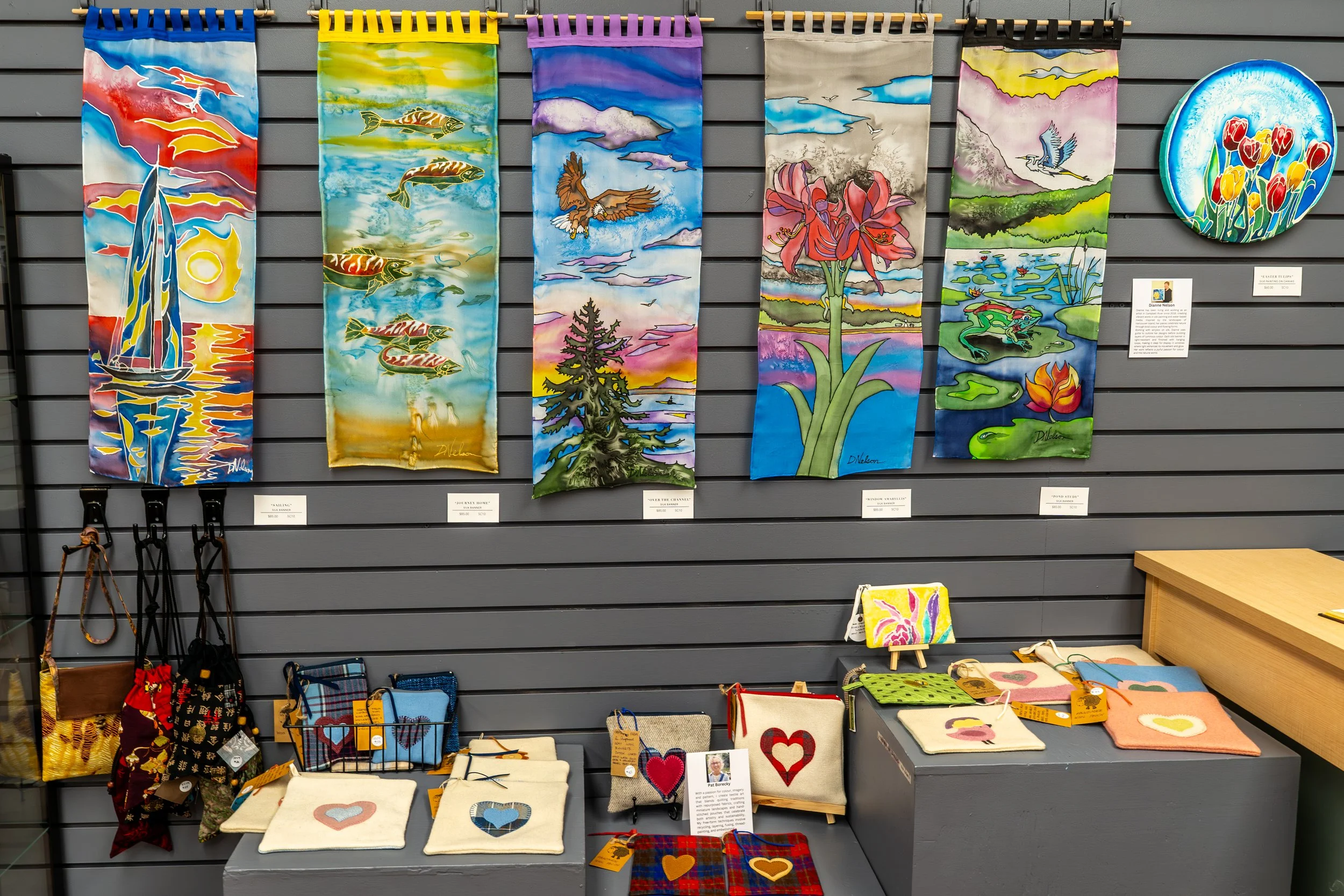
Many of you have likely noticed the new Spotlight on Craft area that we have set up adjacent to the front desk at the Pearl Ellis Gallery. The space has been created to feature three or more different crafters every two months throughout the year except during Giftables (our annual two week pop-up sale of small works).
The aim of this initiative is two-fold. Firstly, it is to highlight the diversity and skill of gallery members who create high quality, three-dimensional, hand-made items that may not typically be shown in the main gallery. Secondly, it is to respond to what visitors have consistently told us they are looking for — hand-crafted items that are compact, transportable and more suitable for gift giving than framed artwork. Spotlight on Craft creates a dedicated opportunity for members to exhibit and sell this type of work, while enhancing the overall visitor experience.
Some members may wonder why we are placing a specific ‘spotlight’ on crafts. Isn’t craft simply another form of art? Meanwhile, others may question whether craft belongs in an art gallery at all. These questions reflect a long-standing conversation that is worth looking into as this debate still continues today.
Underlying the conversation is a perception that craft is sometimes viewed as secondary to art. This is somewhat understandable as craft did begin with the making of simple, functional objects often using natural materials like fibre, leather, clay, metal or glass. However, over time many of these objects became more highly refined and sophisticated — works of art in their own right. Knowledge was passed down through apprenticeships with master craftsmen & women or in guilds and schools as successive generations developed the skills and techniques specific to each trade. Crafts and craftspeople have a long and respected history in cultures around the world.
Art evolved along a parallel, but somewhat different path. Art was typically based on drawing or painting works that were aesthetically pleasing or emotionally moving, but not something that had a practical function. During the Renaissance, artists broke away from the Church and started creating art work that was much more about individual expression. People often learned the skills needed to be an artist through apprenticeships with master artists and later through formal art schools. Art and artists also have a long and respected history throughout the world.
In many Eastern cultures, the distinction between art and craft was never sharply drawn — they were seen as interconnected forms of creative expression. However, in Western cultures a clearer divide occurred. Over time, several movements sought to bridge this gap. The Arts and Crafts movement of the late 19th century, the later Art Nouveau movement, and then the Bauhaus movement all aimed to integrate art and crafts in a merging of design and production.
Today despite these influences, distinctions between art and craft still persist, particularly in how work is displayed and sold. Craft shops often focus primarily on more functional or three-dimensional objects with limited fine art, whereas art galleries prioritize two-dimensional work along with only some sculpture or high-end ceramics, glass and fibre. While the Pearl Ellis Gallery has made meaningful efforts to include a wide range of media, much of the gallery’s exhibition space is still oriented toward wall-based work.
In reality, the lines between art and craft at this point in time are quite blurred. Looking ahead, perhaps the best way to think about this is not as a division between art and craft, but instead as a continuum. At one end might be work that is primarily functional and at the other end work that is primarily aesthetic. In practice, most contemporary arts and crafts fall somewhere along that continuum, which is probably telling us that the worlds of art and craft are truly merging and the distinction may no longer be very relevant. Supporting this concept is that we are seeing a resurgence of interest among young people in traditional crafts, but they are taking these practices to a whole new level that no longer fits traditional definitions of craft.
This brings us back to Spotlight on Craft. The initiative exists to bring greater balance to what we display in the gallery and to provide a focused opportunity for members to show and sell high quality, hand-made, three-dimensional, functional AND beautiful work. In so doing we are more truly reflecting the breadth of creative endeavour within our membership and helping to close the gap in understanding of art and craft.
Perhaps one day a dedicated ‘Spotlight on Craft’ area will no longer be necessary, but for now it does meet a real need and encourages some thoughtful conversations about how we define and value creative work. Members and visitors alike are encouraged to continue these conversations as we develop a more shared understanding of who we are and what we do as artists and makers.
Historical Source: History and Theory of Craft Versus Fine Art - Katlin Rogers - art.art blog

Glenn Gustafson is a self-professed ‘multi-crafter’ who enjoys producing a diversity of work using a large variety of media including fibre, ceramics, wire-work, leather and also photography.